


Pietro Geranzani: symbolism painting, memory and the human condition
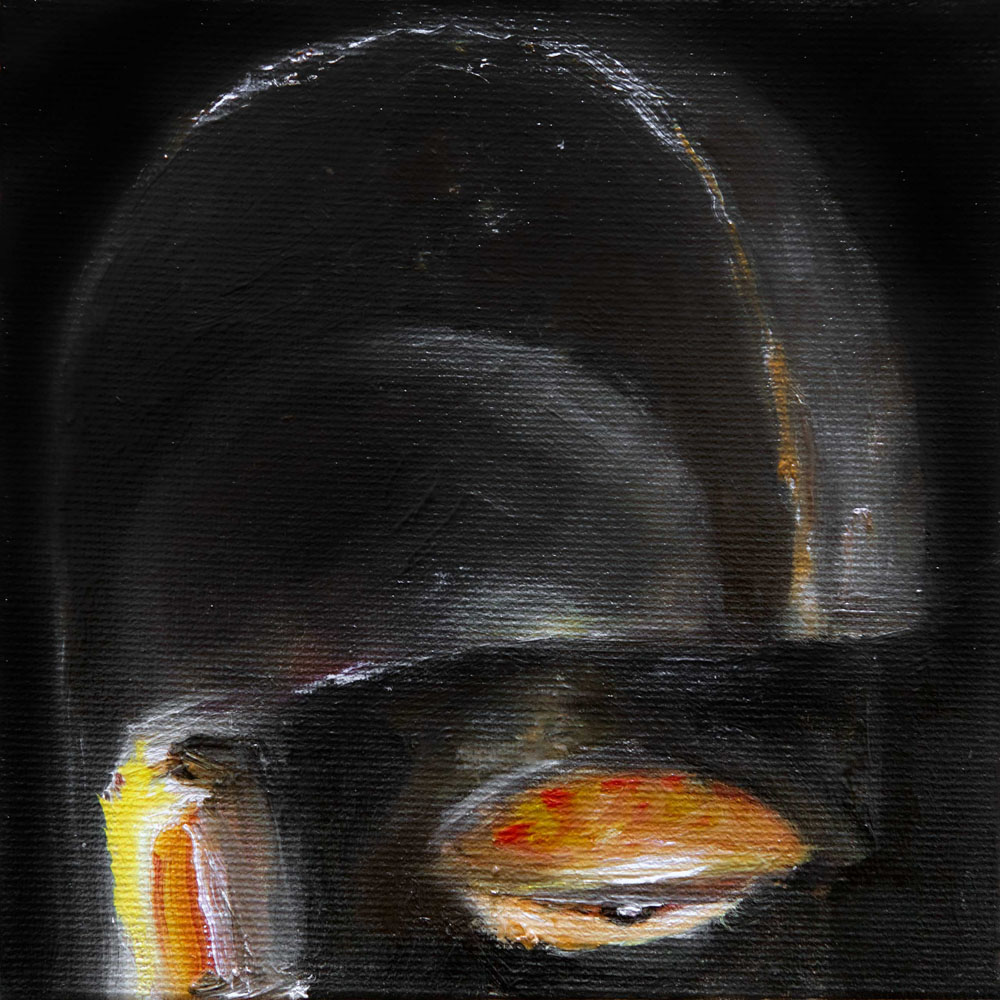
The reflection on human fragility, contemporary conflicts and the contradictions of society lies at the core of the artistic research of Pietro Geranzani. Through an intense and visionary painting practice, the artist creates symbolic universes populated by ambiguous, dramatic and deeply evocative figures.
The art of Pietro Geranzani
Devoted to drawing and painting since the beginning of his career, Pietro Geranzani initially developed his artistic language under the influence of the Neo-Expressionism of the 1980s, later evolving toward an increasingly symbolic and layered visual research.
A distinctive element of his poetics is his fascination with the Wunderkammer, the historical cabinets of curiosities, from which he draws images, inspirations and iconographic references. From these sources emerge polymorphic and polysemic figures, suspended between human, animal and fantastical forms, capable of evoking a dimension that is at once ironic, unsettling and theatrical.
His painting reinterprets iconographies ranging from Classicism to primitive art, creating visionary scenarios where historical memory, allegory and contemporary critique coexist. Through a vision that is both dramatic and mocking, Geranzani addresses themes such as terrorism, violence and the atrocities of war, reflecting on the vulnerability of the human condition.
Since the early 2000s, the artist has also expanded his research into the field of video art, producing short and medium-length films that further investigate the relationship between image, narrative and perception.
Who is Pietro Geranzani
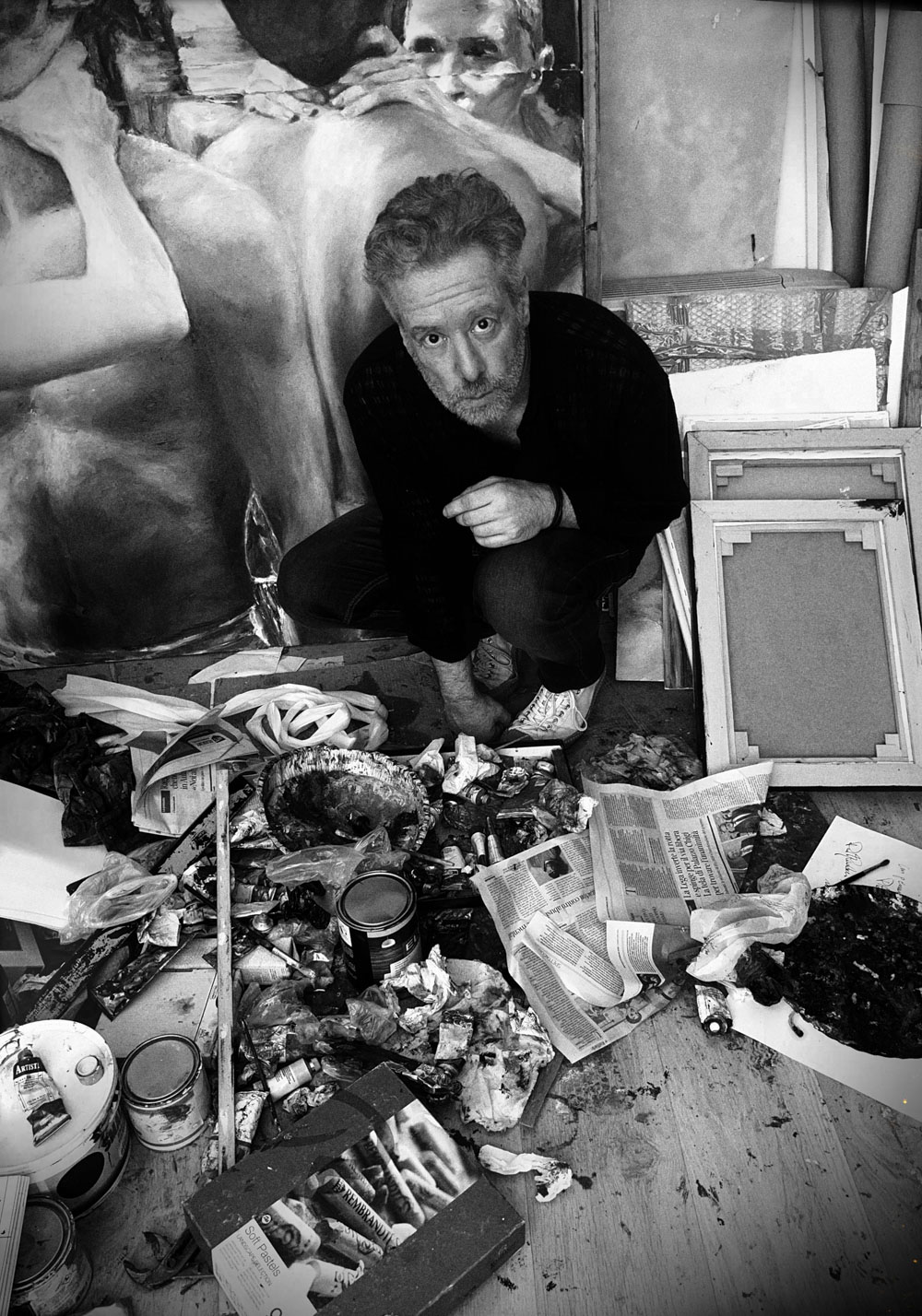
Pietro Geranzani was born in London in 1964. After spending his childhood between Germany and Switzerland, he moved to Genoa in the 1970s, where he studied at the Accademia Ligustica di Belle Arti.
His exhibition career began in 1989 with a show held in the cisterns of the Church of Santa Maria di Castello in Genoa. Since then, he has participated in numerous solo and group exhibitions in Italy and abroad, exhibiting in cities such as Strasbourg, Metz, Reims, Berlin and Zurich.
Among his most significant exhibitions are “Genua-Berlin, Drei Maler aus Genua in Berlin” at the St. Matthaus Kirche in Berlin, “1950–2000, Arte Genovese e Ligure” at the Museum of Contemporary Art Villa Croce, “Fuori Contesto” at the Museum of Modern Art of Nervi, and the major solo exhibition “Ombre Ammonitrici” at the Palazzo Ducale.
In 2011 he participated in the 54th International Art Exhibition of the Venice Biennale within the Italian Pavilion at the Arsenale. Throughout his career he has also been a regular presence at the leading Italian contemporary art fairs.
He currently lives and works in Milan, continuing a pictorial research recognized for its powerful symbolic and emotional intensity.

