


Gazometro by Mauro Reggio
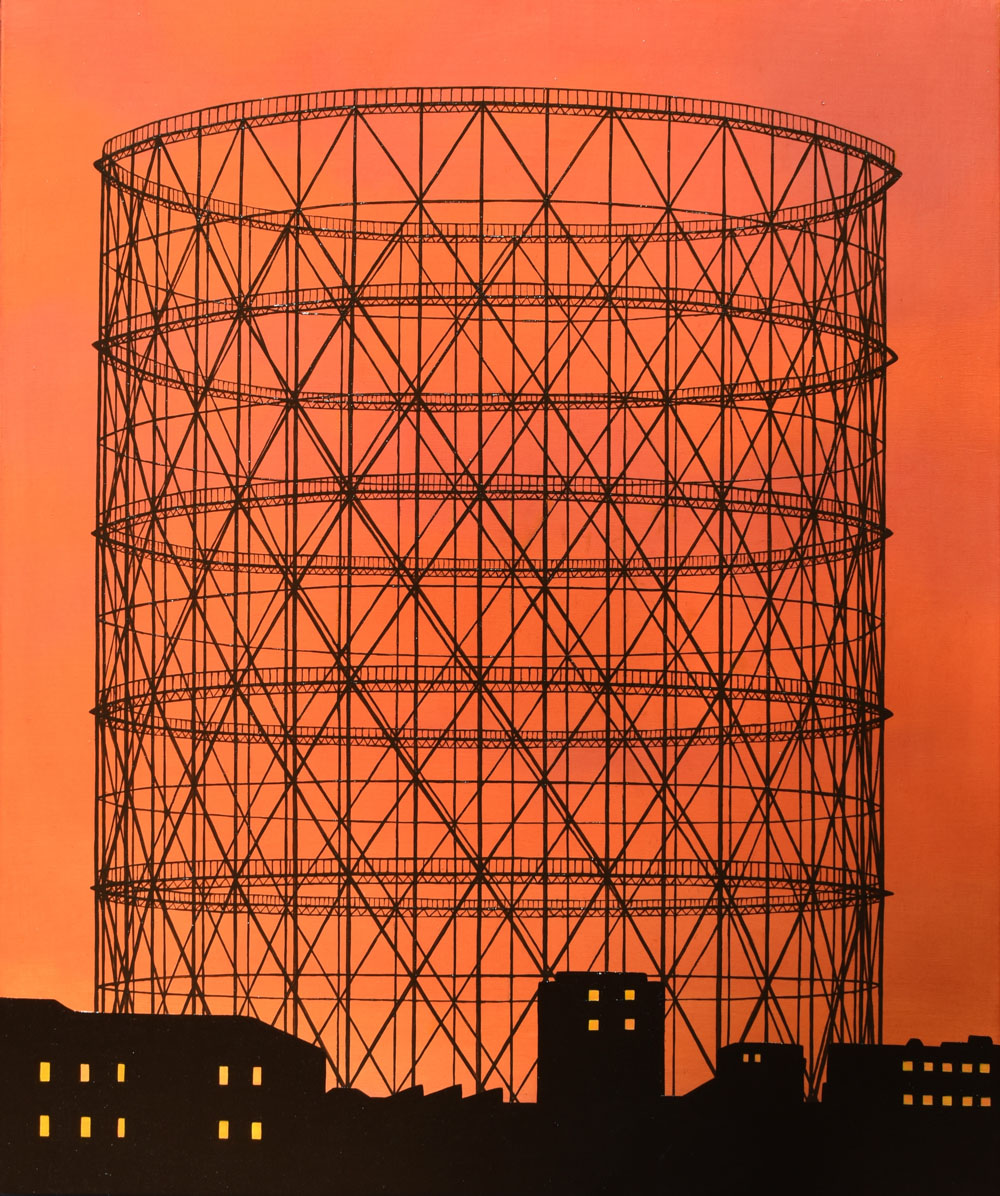
With Gazometro, Mauro Reggio places an iconic piece of industrial architecture at the center of the scene — a symbol of urban transformation and the collective memory of the contemporary city. The gasometer rises majestically against an intense sky, crossed by warm hues and metallic reflections that enhance its monumentality. The work captures the essence of a landscape suspended between past and present, where industrial structures become silent witnesses to an era in constant evolution. Reggio transforms the geometric rigor of these architectures into a poetic and meditative visual language. Form and color merge to offer a new perception of the urban landscape.
The artist: Mauro Reggio
Mauro Reggio (Rome, 1971) is exclusively devoted to urban landscapes, highlighting their perspectives, geometries, and colors. Tangenziali, gasometers, Baroque palaces, and industrial archaeology become timeless subjects, reinterpreted through painting, photography, and contemporary reflections. He has exhibited in Italy and abroad, participating in Biennales and major public and private collections. He lives and works in Rocca di Papa, Rome.
Description “Gazometro”
In the painting, the gasometer’s structure emerges as the absolute protagonist, isolated in a suspended atmosphere where light and silence meet. Reggio constructs the scene through a carefully balanced synthesis of perspectival precision and painterly sensitivity. The metallic lines intertwine in a harmonious equilibrium, while the sky — rendered in warm, diffused tones — gives the work an almost metaphysical dimension. The absence of human presence does not suggest emptiness but contemplation — an invitation to recognize the intrinsic beauty of what the city often overlooks.
Conclusion
With Gazometro, Mauro Reggio continues his exploration of the aesthetics of industrial architecture, transforming functional elements into visual icons of great balance and poetry. The artist invites the viewer to look beyond material form, to perceive within urban geometries a universal language of light, memory, and silence. His painting thus becomes an act of profound observation, capable of restoring dignity and allure to the structures that have shaped the history and identity of the contemporary urban landscape.