


Colosseo quadrato by Mauro Reggio
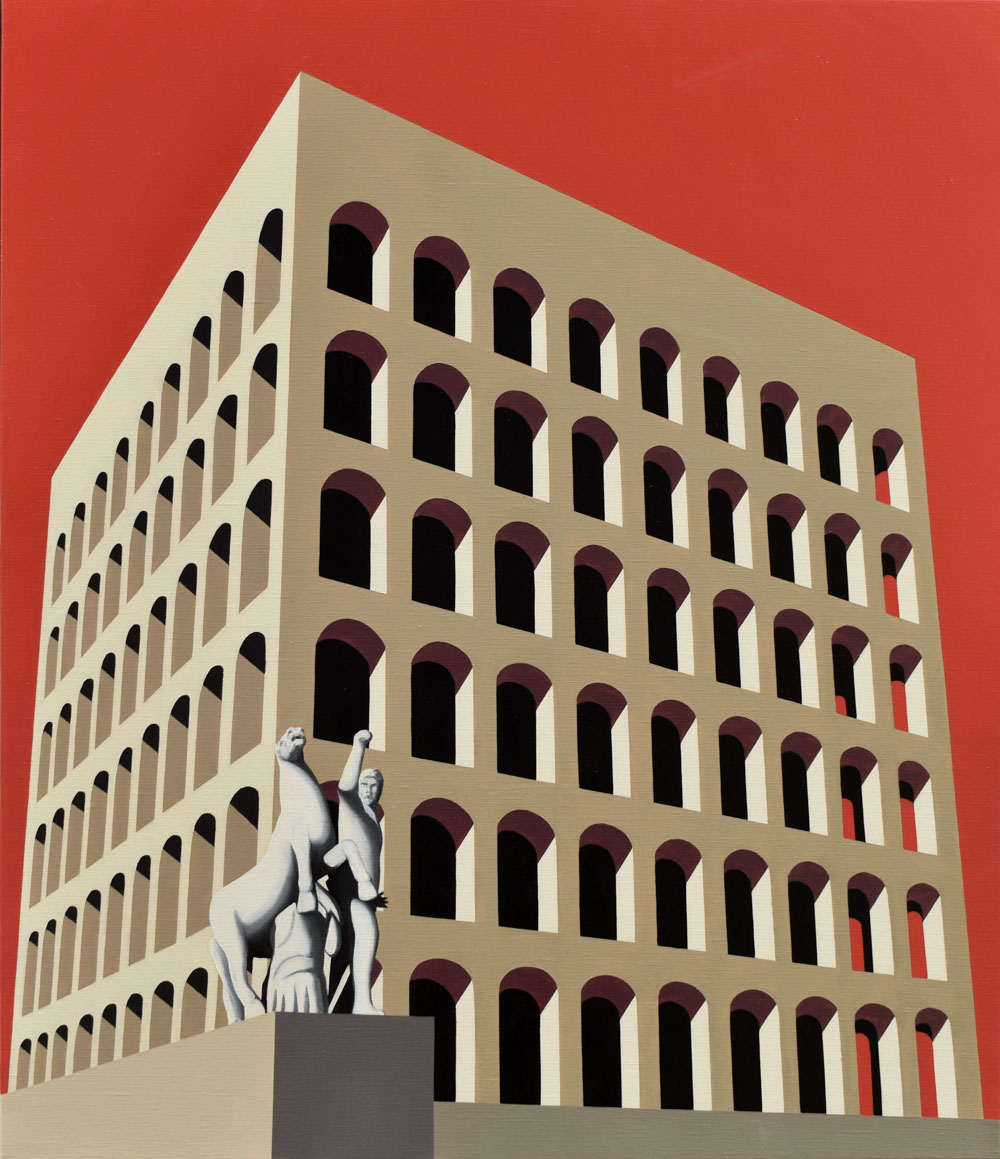
With Colosseo Quadrato, Mauro Reggio places at the center of the scene one of the most iconic and symbolic architectures of modern Rome. The EUR building, with its harmony of arches and volumes, stands out against a bright, rarefied sky, becoming an emblem of balance and rationality. The artist captures the formal power and suspended silence of this monumental structure, transforming it into an image of great visual intensity. Reggio translates architectural grandeur into a poetic and contemplative vision, where matter dissolves into light and geometric rigor opens itself to the dimension of dream.
The artist: Mauro Reggio
Mauro Reggio (Rome, 1971) is exclusively devoted to urban landscapes, highlighting their perspectives, geometries, and colors. Tangenziali, gasometers, Baroque palaces, and industrial archaeology become timeless subjects, reinterpreted through painting, photography, and contemporary reflections. He has exhibited in Italy and abroad, participating in Biennales and major public and private collections. He lives and works in Rocca di Papa, Rome.
Description “Colosseo quadrato”
In the painting, the Colosseo Quadrato emerges as the absolute protagonist, enveloped in a suspended light that enhances its symmetry and formal purity. Reggio interprets the architecture as a symbol of perfection and memory, presenting an image that unites rigor and contemplation. The smooth, luminous surfaces amplify the sense of silence and space, transforming the building into an urban totem — a guardian of history and modernity.
Conclusion
With Colosseo Quadrato, Mauro Reggio continues his reflection on the aesthetics of urban architecture, transforming everyday places into timeless icons. His painting explores the relationship between light and form, between reality and vision, inviting the viewer to rediscover the hidden beauty within the order and stillness of the city’s geometries. Reggio thus restores to the urban landscape its most poetic and spiritual dimension, revealing the silent soul of the contemporary city.