


Acqua alta by Matthias Brandes
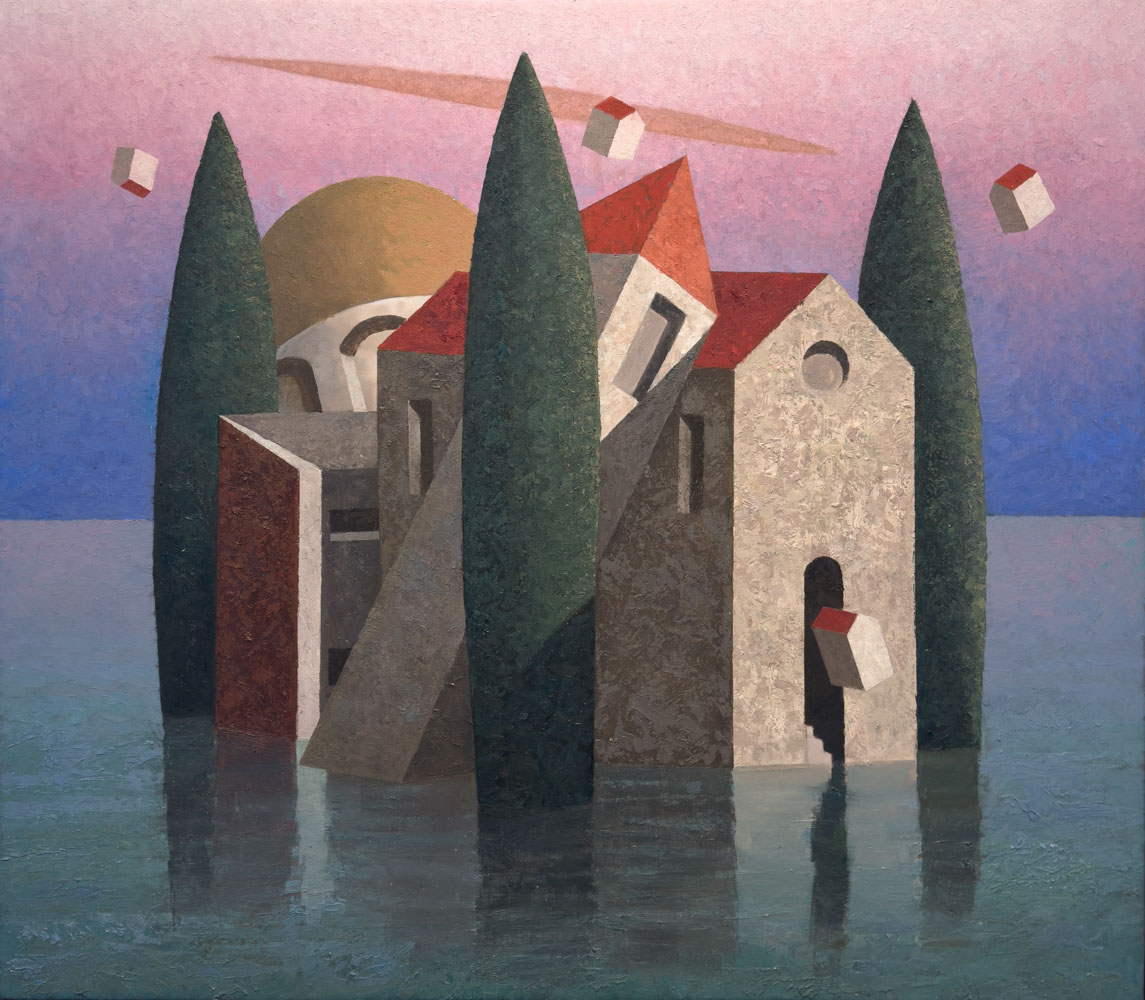
Acqua alta presents one of Matthias Brandes’ signature visionary landscapes: a world built of solid volumes, carved surfaces, and dense, resonant silence. The houses rise like stone blocks—compact, monumental, unchanging—while the rising water surrounding them introduces a sense of suspension and quiet tension. The scene is both calm and unsettling: reassuring in its precise geometry, yet marked by deep shadows and a metaphysical atmosphere. In Acqua alta, Brandes captures the moment in which reality becomes symbol, turning the landscape into an inner vision.
The artist: Matthias Brandes
Brandes constructs his landscapes like painted sculptures. Houses, trees, and skies appear shaped from the same rough, granitic material, forming a world both compact and timeless. His works blend serenity and mystery, echoing Giotto’s rounded volumes, Sironi’s dark perspectives, and the quiet stillness of Morandi. Born in Bochum in 1950, he studied in Hamburg and has exhibited internationally since 1985. His works are held in public and private collections, and in 2012 one of his paintings was acquired by OFA for the London Olympic Creative Cities Collection. He lives and works in Meolo, Veneto.
Description
In Acqua alta, water becomes more than a natural element—it is an emotional boundary. It rises slowly, surrounding the base of the houses and reflecting their monumental silhouettes. The trees, dense and impenetrable, stand immobile. The often blind windows deepen the sense of mystery. Brandes creates a landscape that does not narrate an event but evokes a state of mind: a fragile balance between calm and unease, stability and threat. The scene feels suspended, as if time has paused while the water continues to rise.
Conclusion
Acqua alta speaks through silence. The landscape becomes a metaphor for vulnerability and resilience, a vision that invites reflection on the forces that shape the world and our perception of it. With his solid and evocative poetics, Brandes leads us into a place where the everyday becomes symbolic and every form becomes a story.