


Line #5 by Tom Porta
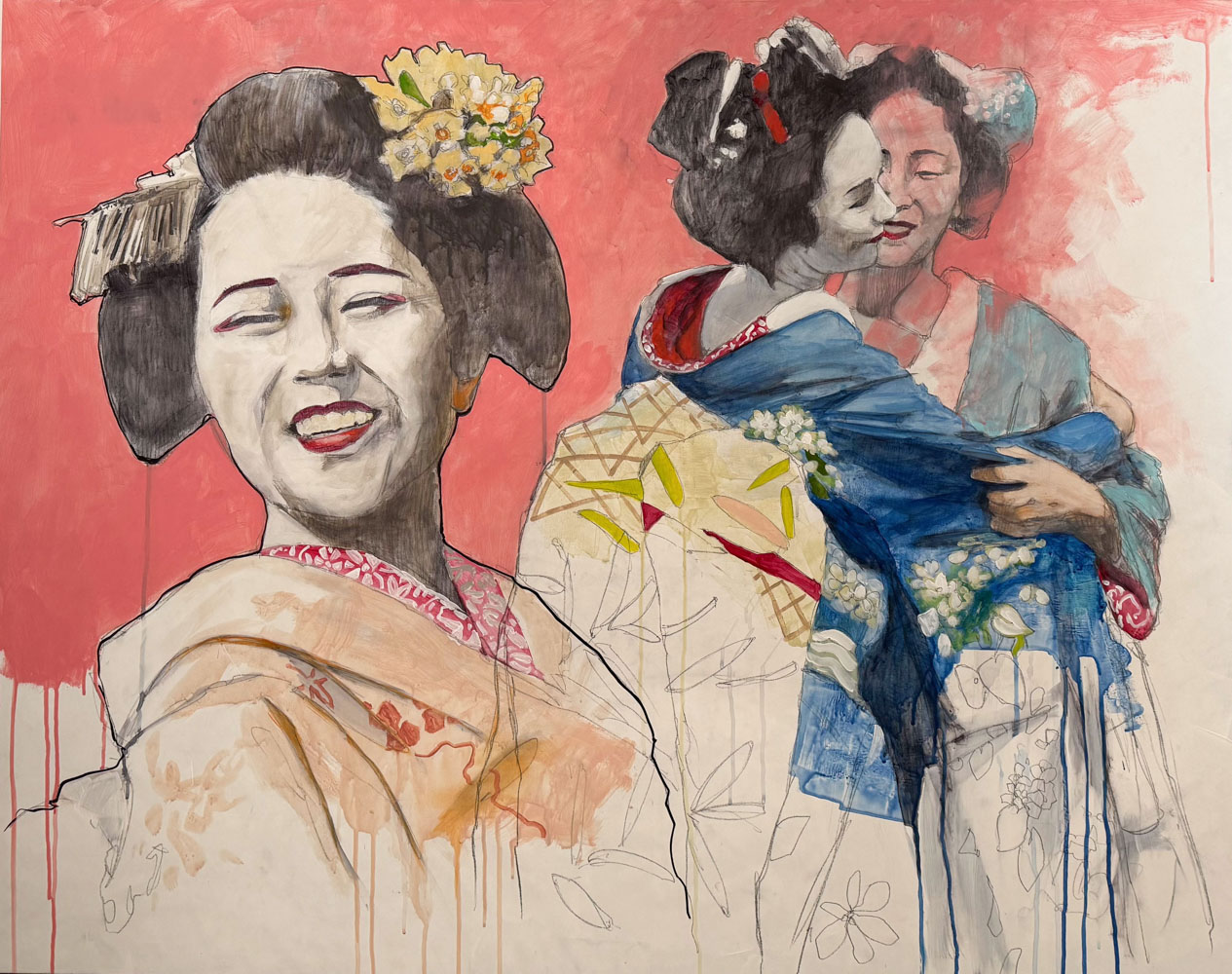
With Line #5, Tom Porta creates an intimate and layered scene. Two female figures in traditional Japanese clothing emerge from a vibrant pink background. On the left, a smiling face appears light and almost suspended. It feels like a memory coming to the surface. On the right, a tender and close gesture suggests a more concrete presence. The two images coexist and overlap. The composition recalls photography, yet remains deeply painterly. Drips, marks, and layers reveal the passage of time within the work.
The artist: Tom Porta
Tom Porta, born in Milan in 1970, develops a practice centered on memory and the history of the twentieth century. After a career in illustration and photography, he has devoted himself exclusively to painting since 2003. His language combines formal precision with a quick, expressive gesture. His international experiences, especially his connection with Japan, strongly influence his vision. His painting becomes a space where different cultures and times meet.
Description “Line #5”
The work is built through layers. The face on the left is rendered in soft, almost monochrome tones. It recalls a vintage photograph. The figure on the right is more defined and richer in color, especially in the blue tones of the kimono. Floral patterns stand out more clearly. Pencil lines remain visible and often unfinished. This creates a balance between construction and dissolution. The background, marked by drips, breaks the illusion of depth and brings attention back to the materiality of the painting.
Conclusion
Line #5 appears as an emotional snapshot. Past and present intertwine without a clear hierarchy. The work does not tell a single story. Instead, it suggests fragments of memory, affection, and identity. The viewer is invited to complete the narrative through personal interpretation. The painting becomes a suspended space, between the visible and the invisible.